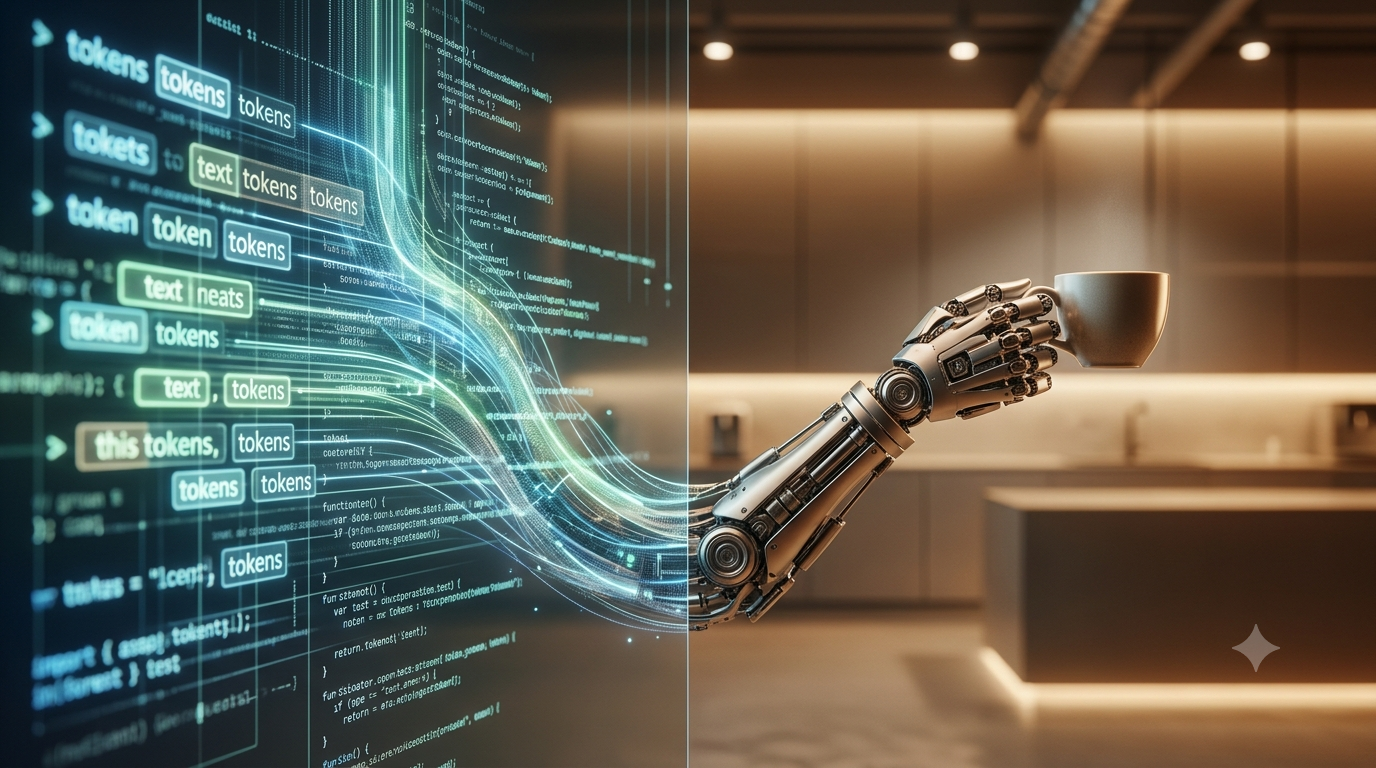
 “We’re witnessing the biggest shift in computing since the cloud revolution—but this time, it’s not about moving applications. It’s about teaching machines to understand reality.”
Imagine asking your AI assistant:
“Book me a flight to Singapore.”
Within seconds, it compares prices, checks your calendar, purchases the ticket, and drops the itinerary into your inbox.
Impressive? Absolutely.
Now, imagine asking a robot:
“Please bring me the coffee mug from the kitchen.”
Suddenly, the problem space changes entirely.
[The Coffee Mug Problem]
Identify Mug ──> Dodge Obstacles ──> Sense Weight/Fullness ──> Apply Exact Grip Force ──> Balance Motion
To complete this seemingly trivial task, the robot has to identify the mug, dodge the toy your kid left in the hallway, estimate the weight of the ceramic, determine if it’s full or empty, grasp it with just enough force to not crush it, and navigate back to your desk without spilling a single drop.
Humans do this without a second thought. For a machine, it’s a monumental challenge because today’s Large Language Models (LLMs) fundamentally lack one thing:
An intuitive understanding of how the physical world works.
That missing capability is what researchers call a World Model. And if World Models become as transformative as LLMs have been over the last few years, they won’t just change robotics—they are going to completely redefine how we build infrastructure, networks, storage, and edge computing platforms.
We Taught Computers to Read. Now We Need to Teach Them Physics.
The first generation of modern AI learned from text.
We fed models millions of books, billions of web pages, and trillions of words. The objective was beautifully simple: predict the next word.
Surprisingly, scaling this single task gave us systems capable of writing clean code, translating languages, and reasoning through complex logic. But language is highly filtered. It is only one way humans understand the world.
Long before a toddler learns their first word, they already have a functional “physics engine” running in their head:
- Gravity: They know a dropped cup falls down, not up.
- Object Permanence: They know a toy placed behind a box didn’t cease to exist.
- Cause & Effect: They know pushing a door makes it swing open.
We don’t memorize these rules from textbooks; we learn them by interacting with our environment.
This brings us to a fundamental truth about computing history:
Every computing revolution has changed what computers understand:
- Mainframes understood calculations.
- PCs understood documents.
- The Internet connected information.
- Smartphones understood people and location.
- Large Language Models understand language.
- World Models aim to understand reality.
If we want AI to step out of the browser and safely operate in our physical world, we have to teach it physics.
But how do you actually train a computer to anticipate the physical world?
So… What Exactly Is a World Model?
Imagine you are driving home. A soccer ball suddenly bounces out from between two parked cars. Before you even see a child run out, your foot is already slamming on the brake.
Your brain didn’t look up a rulebook that said if soccer_ball == true then brake = 100.
Instead, your brain ran a split-second, internal simulation of the future. It predicted what was highly likely to happen next based on years of observing physical patterns.
A World Model does exactly this for machines. Instead of predicting the next word, it predicts the next physical state of the environment.
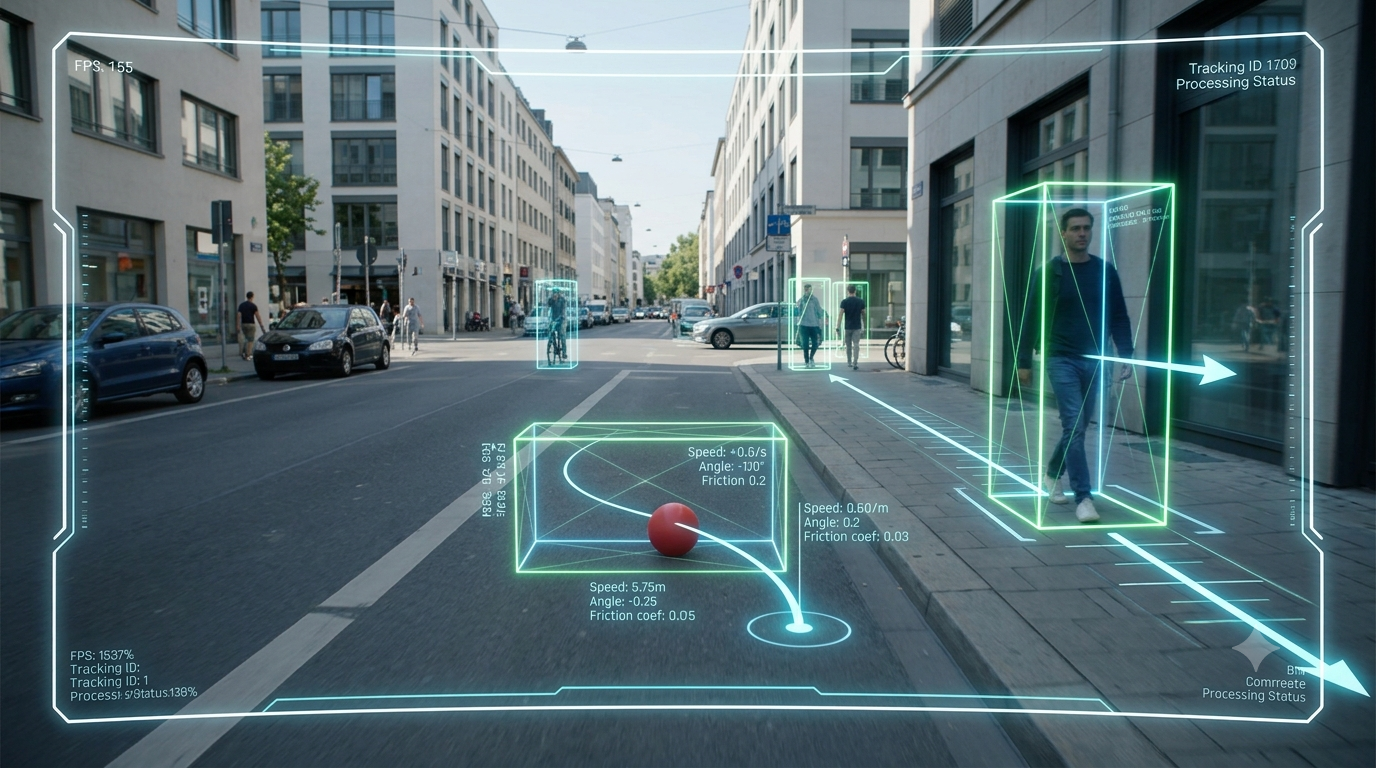
[Current State] + [Action] ──> [World Model Simulation] ──> [Predicted Future State]
It asks:
- If a robot pushes this metal box, how much friction will it encounter?
- If rain starts falling on this asphalt, how will the braking distance change?
- If a forklift turns this sharp corner, will its load shift?
This ability to “imagine” multiple plausible futures is what separates a purely reactive machine from a truly intelligent, safe physical agent.
But why is this transition going to hit the infrastructure world like a tidal wave?
The Hidden Story Nobody Is Talking About: The Infrastructure Wall
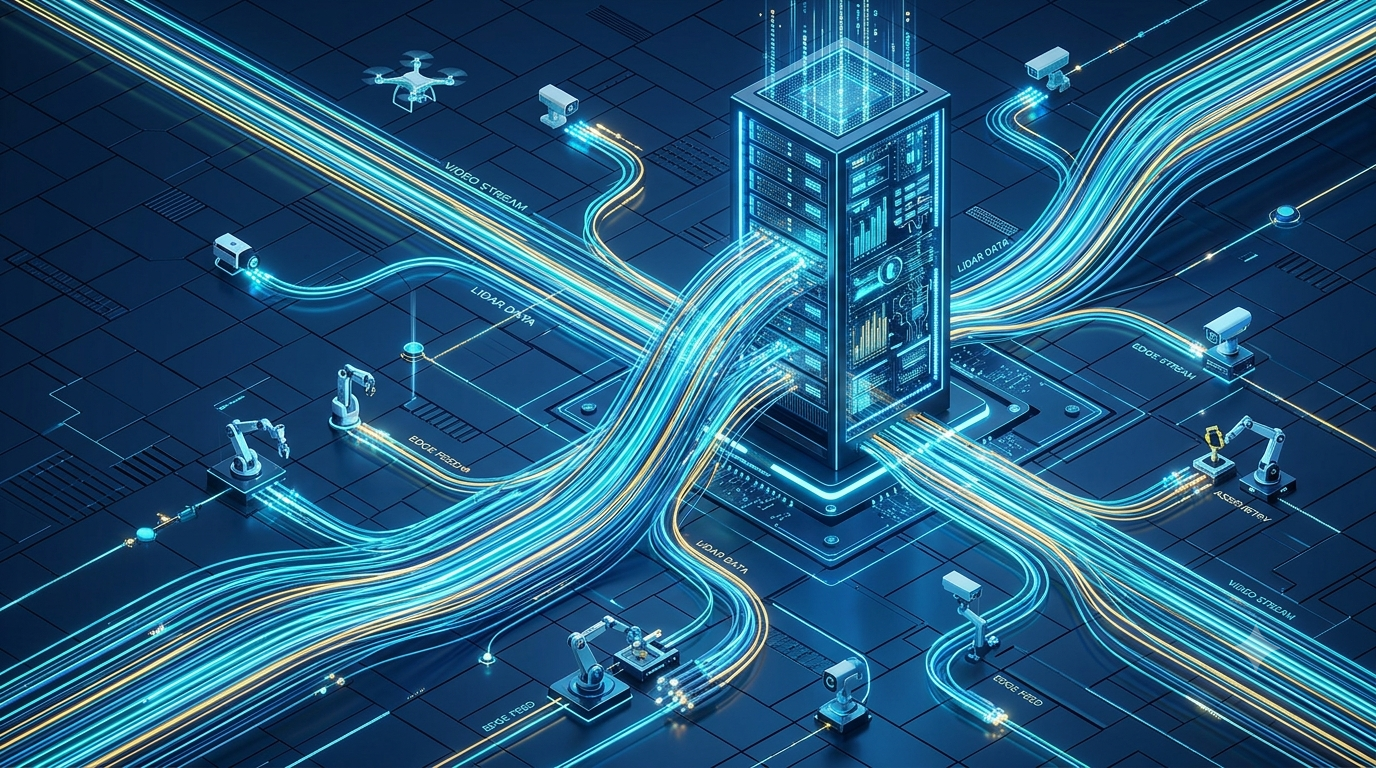 Whenever a new AI breakthrough makes headlines, the spotlight stays on model parameters and raw GPU counts. But beneath every successful AI system lies the unglamorous backbone: systems engineering.
Think about a modern warehouse robot. Every single millisecond, it processes a continuous, multi-dimensional stream of telemetry:
| Sensor Type | Data Contribution |
|---|---|
| High-Res Video | Multi-angle spatial awareness |
| Depth Sensors / LiDAR | 3D point-cloud mapping |
| Inertial Measurement Units (IMUs) | Acceleration, tilt, and balance |
| Motor Telemetry | Joint torque, wheel resistance, and speed |
| Network Telemetry | Real-time latency and packet loss |
Unlike a clean text prompt, this sensory data is massive, messy, and continuous. It must be ingested, synchronized, filtered, and processed instantly.
As World Models move from academic papers to industrial deployment, the engineering bottleneck is shifting. The hard question is no longer just “How do we build a smarter model?”
It is: “How do we build the systems architecture that can feed these models without choking?”
Where Do We Go From Here?
If ChatGPT was the “iPhone moment” for language AI, World Models are in the era of the first smartphones—bursting with potential, moving incredibly fast, and raising massive system design challenges.
We are transitioning away from a software world where data sits passively in databases, and moving toward a world where data is a living, high-throughput stream of physical telemetry.
For software architects, cloud engineers, and infrastructure teams, this is our next great playground. The systems we design over the next decade won’t just run web applications or serve static pages—they will act as the nervous system for machines interacting with reality.
What’s Next in This Series?
This is a massive architectural shift, and we are just scratching the surface. In the upcoming posts, we’ll dive deep into the actual engineering mechanics:
- Part 2: Why World Models are hitting a “Data Ingestion Wall” (and how to design pipelines to bypass it).
- Part 3: Edge vs. Cloud: Deciding what runs locally on the floor vs. what goes back to the simulator core.
- Part 4: Deterministic Networks: Why traditional TCP/IP struggles with Physical AI latency demands.
What do you think? If you are managing cloud or edge infrastructure today, what’s the biggest bottleneck you foresee when scaling continuous, real-time sensor streams? Let’s chat in the comments below.