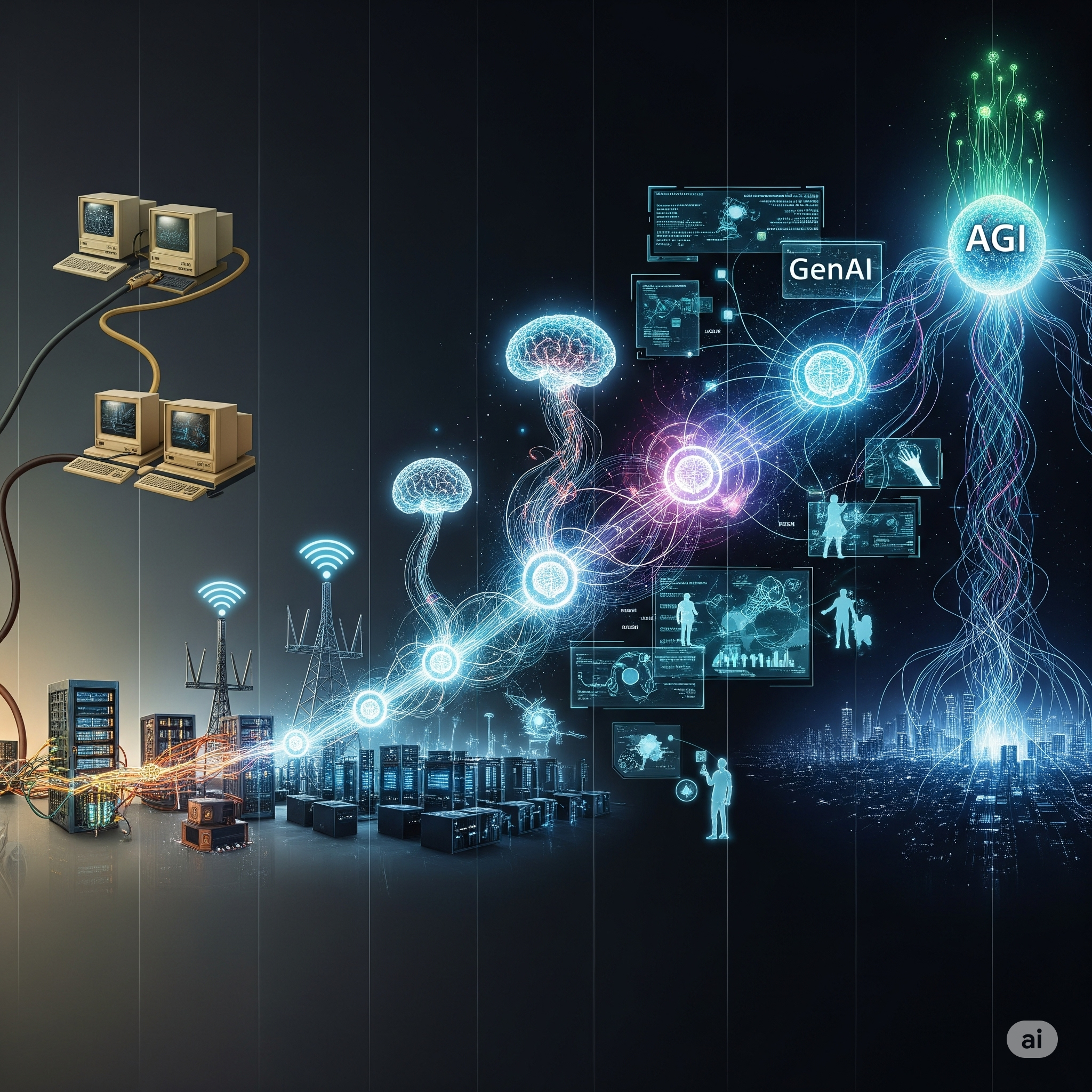
 As we leap into a new era of Artificial Intelligence (AI), Generative AI (GenAI), and look toward the promise of Artificial General Intelligence (AGI), networking—the vital force connecting devices, clouds, and people—is rapidly transforming to meet and shape these revolutions.
From Cables to Cloud: Networking’s Expanding Journey
Ethernet: The Wired Workhorse
Milestones & Evolution:
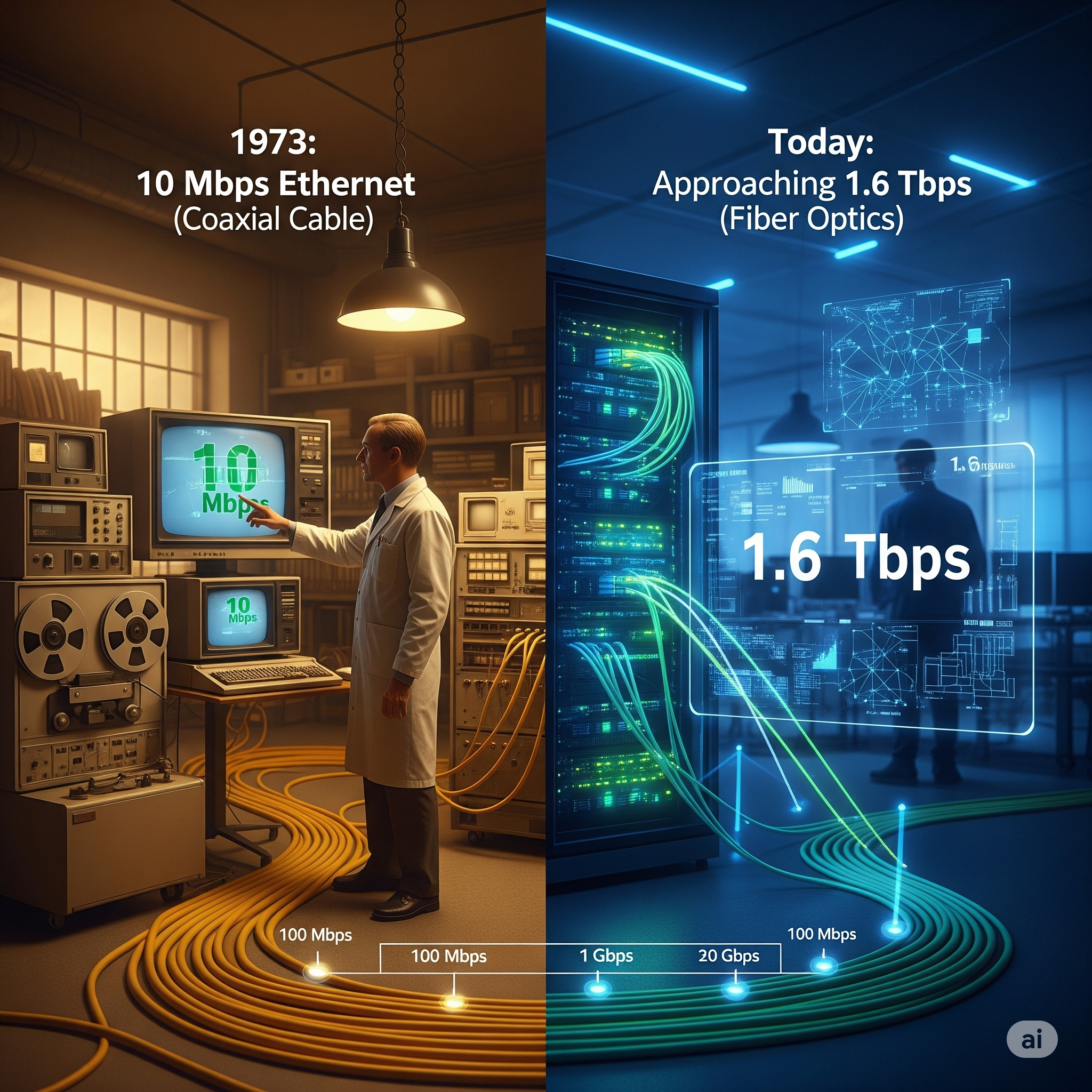
Created in the 1970s, Ethernet began with 10 Mbps LANs, blossomed to Fast Ethernet (100 Mbps, 1995), Gigabit (1 Gbps, 1998), and now supports jaw-dropping 400 Gbps—with 800 Gbps and 1.6 Tbps on the horizon. Advances bring not only speed but also smarter traffic management, redundancy, and microsecond-level latencies for real-time AI.
AI, GenAI, and AGI Use Cases Enabled:
- Large Language Model (LLM) Training: Data center Ethernet fabrics shuttle terabytes per second between thousands of GPUs for model training, vital for GenAI like GPT and image generators.
- Distributed Inference: Ultra-fast wired networks serve real-time AI-driven video analytics, financial trading bots, and autonomous robots on shop floors.
- AGI Future: When AGI becomes reality, expect Ethernet’s adaptability and speeds to underpin next-gen “AI mesh” infrastructures interlinking advanced cognitive systems.
Wi-Fi: Wireless Freedom and Everyday Intelligence
Milestones & Evolution:
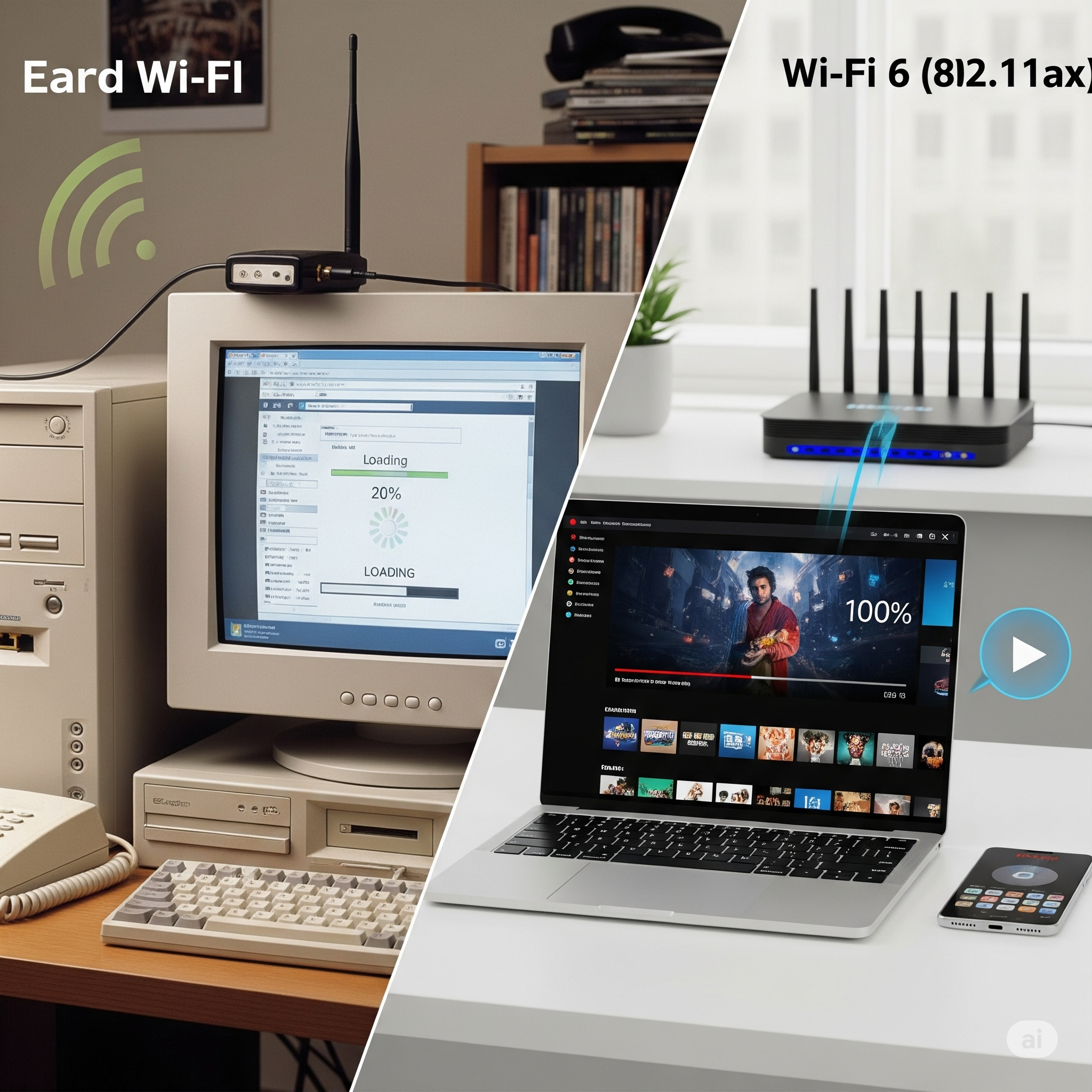
Wi-Fi’s journey started in the late 1990s (11 Mbps), scaling to Wi-Fi 4 (600 Mbps), Wi-Fi 5 (Gbps+), Wi-Fi 6 (multi-gigabit, dense environments), and Wi-Fi 7 (up to 46 Gbps, 2024). Each leap brought better range, speed, and efficiency for today’s device-packed world.
AI, GenAI, and AGI Use Cases Enabled:
- Smart Homes & Edge AI: Streaming real-time camera feeds, enabling AI-powered home assistants, and supporting smart appliances all depend on next-gen Wi-Fi.
- AR/VR and Real-Time Collaboration: Wi-Fi 6/7 provide seamless, low-latency connections vital for immersive GenAI-powered experiences—virtual meetings, design, training, and healthcare.
- AGI on Personal Devices: If AGI-capable devices arrive, Wi-Fi’s speed and intelligence will be crucial for brains-on-the-move—enabling wearable AGI assistants, continuous language translation, or deeply personalized co-pilots.
Cellular Networks: Mobility Powering AI Everywhere
Milestones & Evolution:
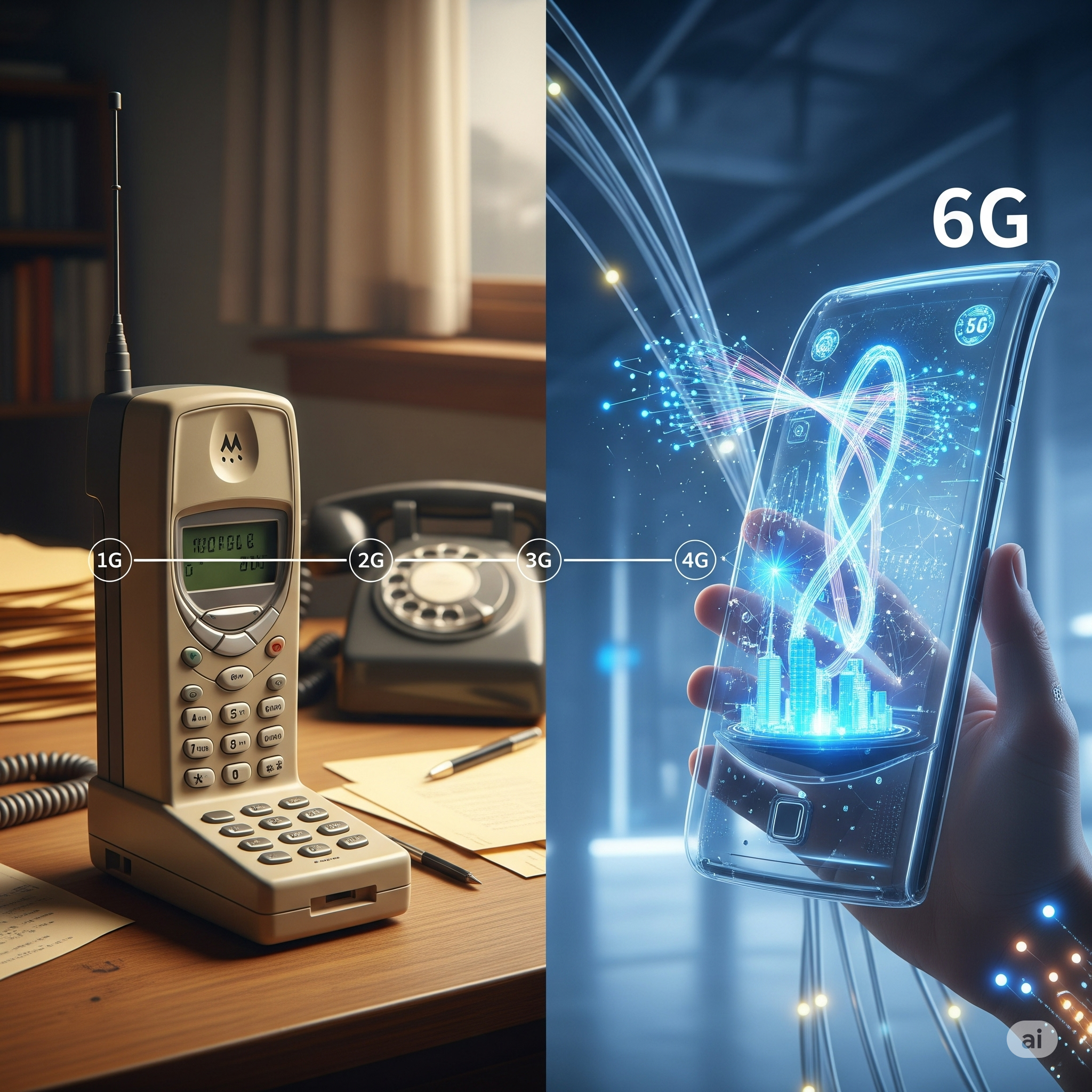
From analog 1G (voice only, 1980s), to 2G (texts, digital), 3G (internet, early 2000s), 4G (HD streaming, mobile broadband), and today’s 5G/6G (multi-gigabit, ultra-low latency), cellular networks keep raising the bar, enabling AI at global scale.
AI, GenAI, and AGI Use Cases Enabled:
- Autonomous Mobility: 5G’s low latency and reliability fuel vehicle-to-everything (V2X) systems, drones, and delivery robots—all requiring real-time AI coordination.
- Massive IoT & AI at the Edge: Billions of smart sensors in cities, agriculture, and factories rely on cellular to connect with AI/GenAI-powered analytics.
- AGI and Future Cities: Envision AGI orchestrating entire smart cities over 6G, remotely managing utilities, traffic, healthcare, and disaster response instantly across regions.
Deeper: How AI, GenAI, and AGI Reshape Networking
- AI-Driven Operations: Modern networking gear uses AI to automate configuration, monitor health, and predict failures—networks that heal themselves and optimize traffic without human input.
- GenAI for IT Teams: GenAI creates scripts, policies, reports, even entire network configurations through natural language, radically simplifying IT operations and accelerating innovation.
- Security and Trust: AI/GenAI models power adaptive firewalls, instant threat detection, and zero-trust architecture—an ever-changing defense against cyber threats in the AI age.
- Towards AGI: Future networks may support AGI by providing dynamic, cognitive “network brains” that self-organize, learn, and autonomously manage global connectivity for AGI-powered economies.
A Symbiotic Future: Networks × Intelligence
Networks and intelligent systems are now inseparable:
- AI/GenAI-Optimized Networks: Self-adapting edge networks prioritize critical AI traffic, minimize latency, and guarantee Quality of Service (QoS) for vital workloads.
- Intelligent Collaboration: High-speed connections enable AGI and GenAI systems to collaborate—solving complex problems, automating science, or orchestrating crisis responses across continents.
Final Thoughts
The evolution from humble Ethernet, Wi-Fi, and cellular beginnings to today’s deeply intelligent, adaptable infrastructure is nothing short of astounding. With each leap, networks both empower and are transformed by the rise of AI, GenAI, and eventually AGI.
As we look ahead: networks will not just be the enablers, but also the co-pilots, self-learning, sometimes self-governing systems underpinning the intelligence revolution.
Sources consulted: Wikipedia (“Ethernet”, “Computer network”), Computer History Museum, IEEE, TechTarget, Oracle, World Intellectual Property Organization, Google Cloud, LinkedIn insights.